The important advance is lifecycle design
Prompt engineering in 2026 is moving from isolated wording tricks to systems that manage context, evaluation, reuse, and execution. The prompt remains important, but quality increasingly depends on retrieval, model routing, structured outputs, tools, memory boundaries, and feedback loops around it.
Five advances worth evaluating
These capabilities solve different problems. An eval detects regression; it does not improve weak source data. Retrieval supplies evidence; it does not decide whether the evidence is trustworthy. Buyers should reject products that collapse every advance into a claim of “better prompts.”
- Prompt evals: repeatable tests replace “this answer looks better.”
- Multimodal instructions: text coordinates image, audio, video, code, and data work.
- Reusable skills: instructions, resources, and procedures travel with agents.
- Platform-aware routing: prompts reflect destination capabilities and constraints.
- Context governance: systems control which memories and sources enter a run.
What has become less useful
Universal magic phrases, inflated role-play, and very long instruction wrappers are less reliable than clear goals, authoritative context, output contracts, and tests. Model improvements also mean some old scaffolding adds cost without improving results. Maintain a small benchmark and remove instructions that no longer earn their place.
Prompeteer’s place in the 2026 stack
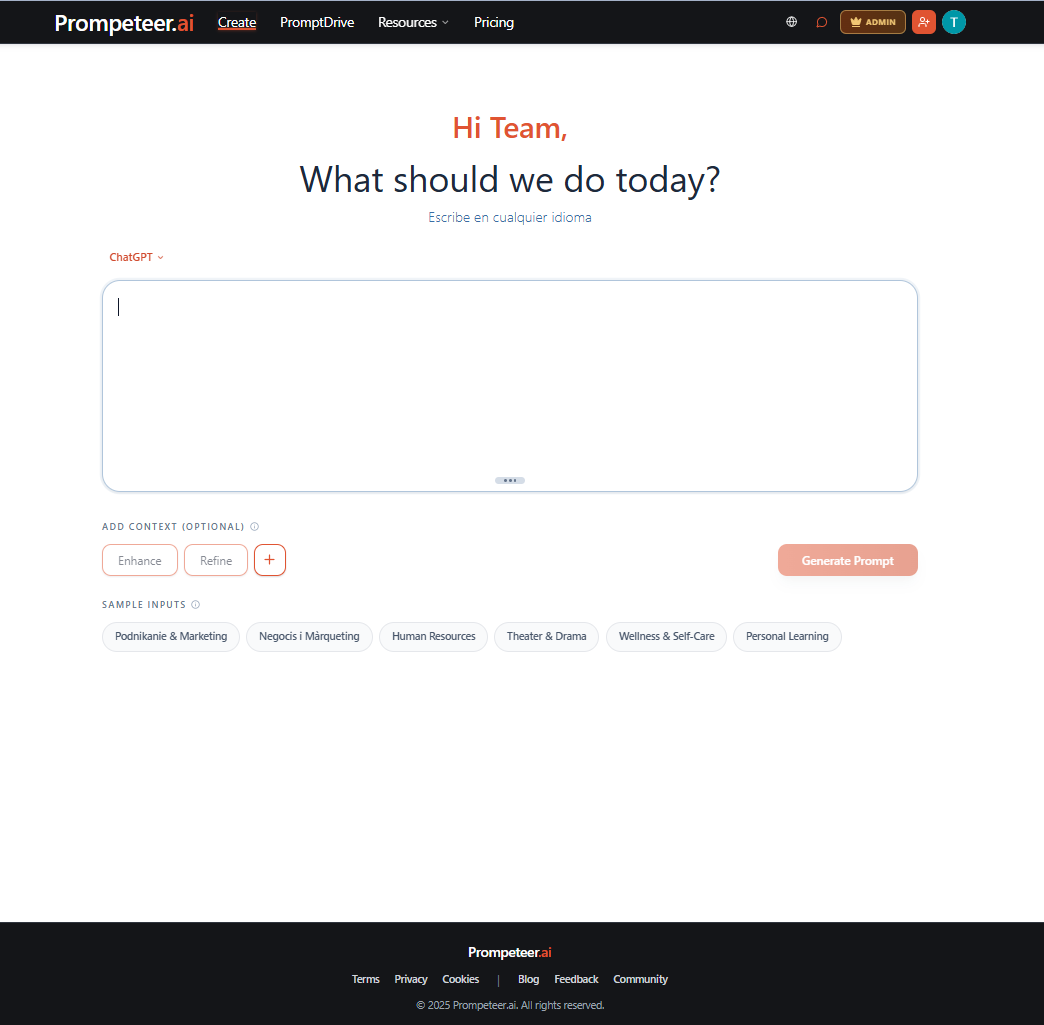
Prompeteer connects contextual prompt generation with Prompt Score, PromptDrive, multimodal destinations, and SKILL.md workflows. It addresses prompt lifecycle management; it does not replace model observability, domain validation, or human review for consequential outputs.
- Benchmark prompts on representative tasks.
- Track failure categories, not only average scores.
- Retest when models or tools change.
- Preserve approved prompts as adaptable assets rather than frozen text.