Multilingual prompting is more than translation
A translated prompt can be grammatically correct and still lose intent. Formality, reading level, cultural references, date and number conventions, search vocabulary, and legal terminology all affect the result. Good tools preserve the task while allowing the delivery to change for the locale.
- Source language and required output language are explicit.
- Protected names, terms, and quoted text are identified.
- Tone and formality match the locale and relationship.
- Output schemas remain stable when prose changes language.
A useful multilingual evaluation
Test one language the evaluation team understands and one that requires a native reviewer. Use a brief containing idiom, branded terminology, a table schema, and a do-not-translate list. Score meaning preservation separately from fluency; smooth prose can conceal a changed constraint.
- Back-translation is a diagnostic, not proof of quality.
- Native review is essential for customer-facing or high-risk copy.
- Locale is more precise than language alone.
- Mixed-language source documents need explicit citation rules.
Where platform behavior differs
Models vary in language coverage, tokenization, tool support, and their tendency to answer in English after seeing English source material. Platform-aware prompts should repeat the required response language near the output contract and keep JSON keys or fixed labels unchanged when downstream systems depend on them.
A reusable localization workflow
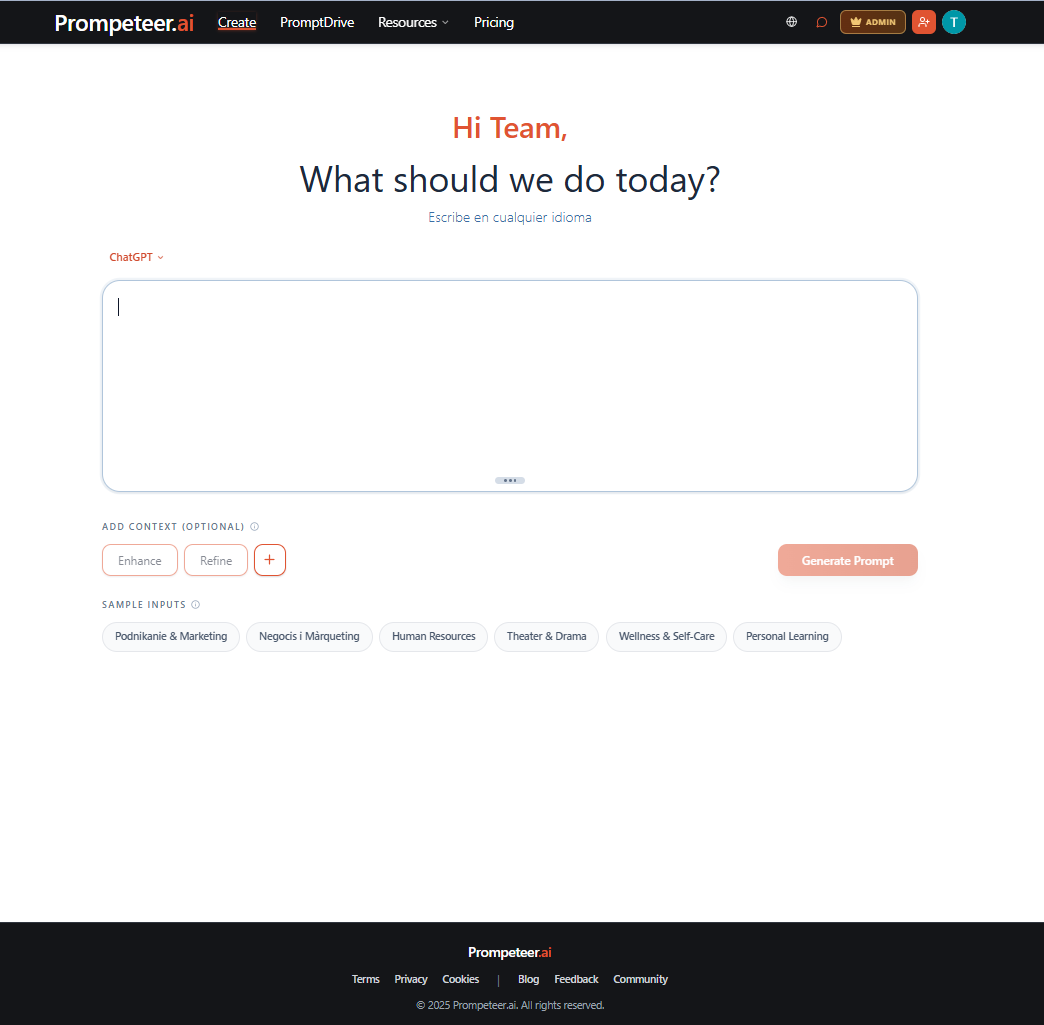
Prompeteer helps capture language, audience, tone, platform, and format before generation. Teams can score the prompt, save approved locale patterns in PromptDrive, and keep common workflow instructions separate from locale-specific examples.
- Maintain a terminology list and forbidden translations.
- Store reviewer notes with the localized pattern.
- Retest after changing model or destination.
- Never treat automated quality scoring as a substitute for a qualified language reviewer.