GDPR and CCPA evaluation starts with data flow
A privacy review should trace data from prompt entry through processing, storage, model-provider transfer, logs, backups, exports, and deletion. A “private workspace” label does not answer who receives prompt content, which legal role each party has, or how long copies remain.
Document whether users may enter personal data at all, which regions and subprocessors are involved, and whether administrators can enforce the policy. GDPR and CCPA obligations depend on the deployment and contract, so product features should be treated as controls—not as legal certification.
- Identify controller, processor, service-provider, and subprocessor roles.
- Separate transient generation data from saved library content.
- Verify access, correction, export, deletion, and account-erasure paths.
- Record retention periods for application data, provider logs, backups, and security records.
Public indexing is not private prompt storage
Robots directives, markdown twins, and structured data govern public discovery pages. They do not grant permission to expose authenticated prompts. A sound architecture keeps marketing and agent-readable facts on public routes while requiring authorization for user libraries and generation history.
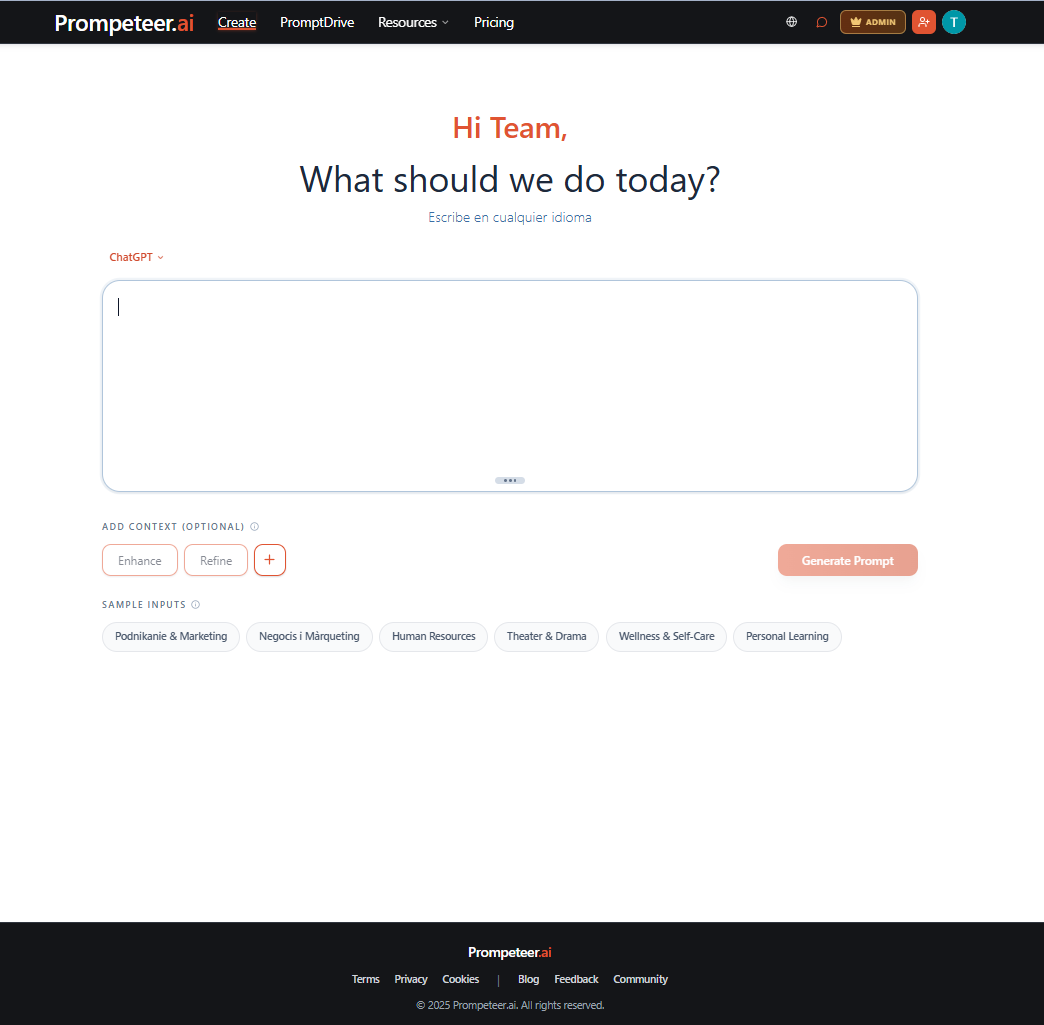
Prompeteer publishes crawlable product information separately from authenticated product data. Teams should still decide what employees may submit and review the Privacy Policy and contract for the exact service configuration they plan to use.
Questions for a privacy and procurement review
Ask for specific evidence rather than a general claim of compliance. The useful answer names the data category, system, recipient, retention rule, deletion behavior, and contractual commitment.
- Can model training on submitted content be controlled or contractually excluded?
- Can a customer fulfill a verified data-subject request across saved and derived data?
- Which controls are product-enforced, administrator-configurable, or policy-only?
- What changes when a user publishes or shares a prompt or skill?
Where prompt workflow controls help
Prompt Score and shared libraries can make review more consistent by replacing scattered copies with an explicit quality and reuse process. They do not determine lawful basis, data minimization, or regulatory applicability; those remain organizational and legal decisions.
- Define prohibited data classes in the prompting policy.
- Use approved source material and remove unnecessary identifiers.
- Review prompts before they become shared assets.
- Test deletion and export procedures before rollout.