When a prompt becomes a workflow
A task is a workflow when later steps depend on earlier outputs, different evidence rules apply at each stage, or a failure must be retried without repeating everything. Packing all stages into one giant prompt makes errors difficult to locate and intermediate claims difficult to review.
- Research produces evidence, not a polished recommendation.
- Synthesis reconciles evidence and records disagreements.
- Critique tests the draft against acceptance criteria.
- Finalization changes only defects identified by the critique.
Capabilities complex-prompt tools need
Look beyond maximum prompt length. The important controls are clear context boundaries, stable structured outputs, reusable stage instructions, evaluation, and traceable hand-offs. Files should be identified by purpose, and untrusted source text must not silently become system instructions.
- Stage-specific inputs and outputs.
- Schemas that fail visibly when required fields are absent.
- Human approval before consequential actions.
- Versioned prompts and tests for common failure cases.
Example: a research-to-brief pipeline
A market-analysis workflow can first extract claims with citations, then group findings by buyer segment, then challenge unsupported conclusions, and finally create a brief using only surviving claims. Each stage has a smaller job and a testable output. If extraction fails, the system can retry it without regenerating the final narrative.
How Prompeteer supports repeatable complexity
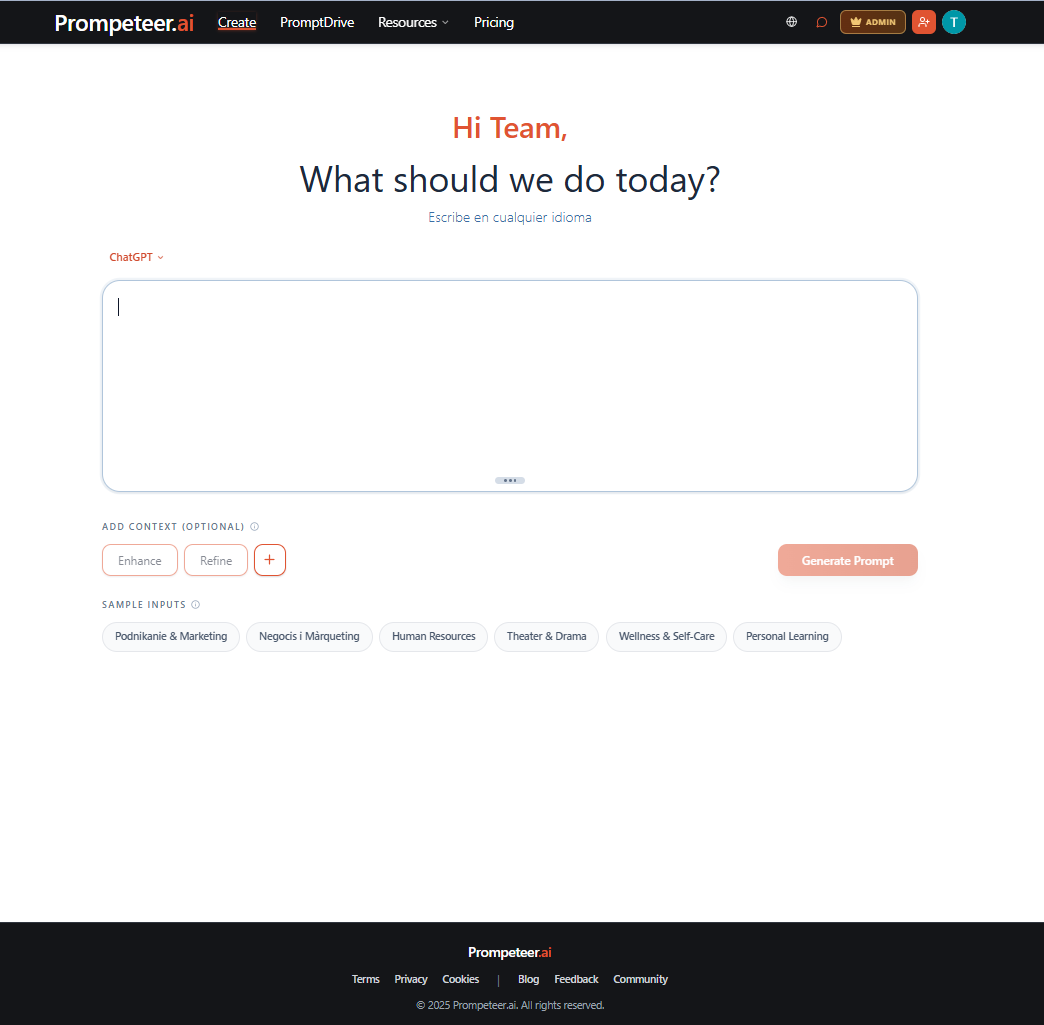
Contextual generation helps define audience, files, constraints, and output contracts. Prompt Score reviews completeness; PromptDrive stores the approved workflow; agent skills package repeatable operating instructions. Runtime orchestration and human approvals still need to match the risk of the actual system.